<?xml version="1.0" encoding="utf-8"?>
<feed xmlns="http://www.w3.org/2005/Atom" xmlns:media="http://search.yahoo.com/mrss/">
    <title>Prezelfy</title>
    <link href="https://www.prezelfy.com/feed.xml" rel="self" />
    <link href="https://www.prezelfy.com" />
    <updated>2026-01-26T20:27:23+01:00</updated>
    <author>
        <name>Prezelfy UG</name>
    </author>
    <id>https://www.prezelfy.com</id>

    <entry>
        <title>The Hidden Organizational Cost of Poor Cloud Decisions</title>
        <author>
            <name>Prezelfy UG</name>
        </author>
        <link href="https://www.prezelfy.com/the-hidden-organizational-cost-of-poor-cloud-decisions/"/>
        <id>https://www.prezelfy.com/the-hidden-organizational-cost-of-poor-cloud-decisions/</id>
        <media:content url="https://www.prezelfy.com/media/posts/24/ChatGPT-Image-26-Jan-2026-17_29_38.png" medium="image" />
            <category term="Resources"/>
            <category term="Cloud"/>

        <updated>2026-01-26T17:27:07+01:00</updated>
            <summary type="html">
                <![CDATA[
                        <img src="https://www.prezelfy.com/media/posts/24/ChatGPT-Image-26-Jan-2026-17_29_38.png" alt="" />
                    When companies talk about cloud decisions, the conversation usually revolves around cost, performance, and security. These are important topics, but they only tell part of the story. The most damaging consequences of poor cloud decisions are often not visible on a cost report or an&hellip;
                ]]>
            </summary>
        <content type="html">
            <![CDATA[
                    <p><img src="https://www.prezelfy.com/media/posts/24/ChatGPT-Image-26-Jan-2026-17_29_38.png" class="type:primaryImage" alt="" /></p>
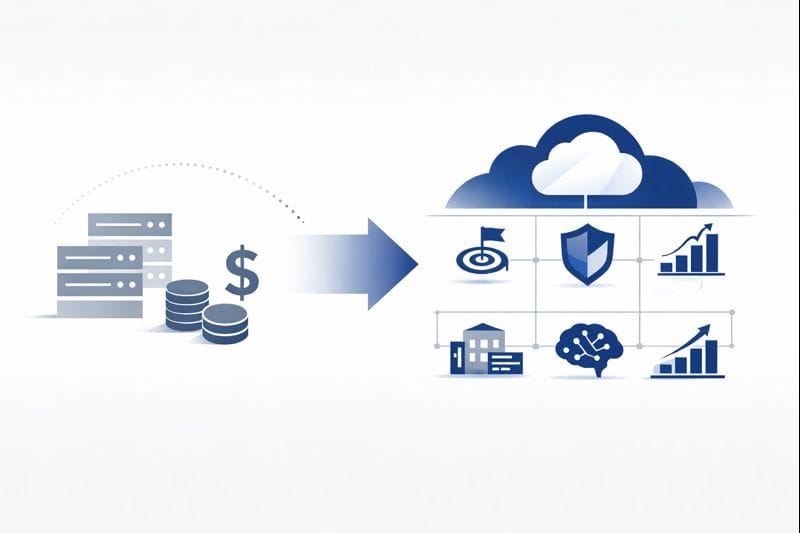
                <p>When companies talk about cloud decisions, the conversation usually revolves around cost, performance, and security. These are important topics, but they only tell part of the story. The most damaging consequences of poor cloud decisions are often not visible on a cost report or an architecture diagram.</p><p><strong>They show up in the organization.</strong></p><p>Slow decision-making, unclear ownership, constant friction between teams, and a growing sense that “everything is harder than it should be” are common symptoms. These issues are frequently treated as cultural or management problems, but in many cases their root cause lies in how the cloud environment was designed and governed.</p><p>Poor cloud decisions create organizational drag. And that drag compounds over time.</p><div class="kg-card kg-header-card kg-v2 kg-width-regular " style="background-color: #000000;" data-background-color="#000000">
            
            <div class="kg-header-card-content">
                
                <div class="kg-header-card-text kg-align-center">
                    <h2 id="cloud-choices-shape-how-organizations-work" class="kg-header-card-heading" style="color: #FFFFFF;" data-text-color="#FFFFFF"><span style="white-space: pre-wrap;">Cloud Choices Shape How Organizations Work</span></h2>
                    <p id="architecture-is-organizational-design" class="kg-header-card-subheading" style="color: #FFFFFF;" data-text-color="#FFFFFF"><span style="white-space: pre-wrap;">Architecture is organizational design.</span></p>
                    
                </div>
            </div>
        </div><p>Cloud platforms are not neutral infrastructure. They embed assumptions about how teams deploy software, how responsibilities are split, and how decisions are made. Whether intentionally or not, cloud architecture becomes an operating model.</p><h3 id="cloud-architecture-becomes-an-operating-model">Cloud architecture becomes an operating model</h3><p><strong>Whether intentionally or not, cloud architecture becomes an operating model.</strong> For example, a highly centralized cloud setup with heavy approval processes might reduce certain risks, but it also conditions teams to wait. Engineers learn that experimentation is slow. Product teams learn to avoid change. Over time, initiative drops and workarounds increase.</p><p>On the other end of the spectrum, a completely decentralized setup may feel fast at first, but it often leads to confusion. Teams solve the same problems repeatedly. Security expectations differ from one environment to another. When something goes wrong, it is unclear who is responsible. Trust erodes, and coordination costs rise.</p><p>In both cases, the issue is not the cloud itself. It is the organizational design encoded into cloud decisions.</p><div class="kg-card kg-header-card kg-v2 kg-width-regular " style="background-color: #000000;" data-background-color="#000000">
            
            <div class="kg-header-card-content">
                
                <div class="kg-header-card-text kg-align-center">
                    <h2 id="the-cost-you-dont-see-on-a-cloud-bill" class="kg-header-card-heading" style="color: #FFFFFF;" data-text-color="#FFFFFF"><span style="white-space: pre-wrap;">The Cost You Don’t See on a Cloud Bill</span></h2>
                    <p id="time-energy-and-attention-are-the-real-currency" class="kg-header-card-subheading" style="color: #FFFFFF;" data-text-color="#FFFFFF"><span style="white-space: pre-wrap;">Time, energy, and attention are the real currency.</span></p>
                    
                </div>
            </div>
        </div><h3 id="the-real-cost-is-paid-in-time">The real cost is paid in time</h3><p>The hidden cost of poor cloud decisions is paid in time, energy, and attention.</p><p>Meetings multiply because responsibilities are unclear. Engineers spend hours navigating internal processes instead of building value. Leaders are pulled into technical escalations they should not need to handle. <strong>These costs rarely appear in financial reports, but they directly affect productivity and morale.</strong></p><h3 id="when-inefficiency-becomes-normal">When inefficiency becomes normal</h3><p>Over time, this drag becomes normalized. Teams accept long lead times and manual work as “just how things are.” This is particularly dangerous because it masks the real problem. <strong>The organization adapts to the inefficiency instead of addressing it.</strong></p><p>Cloud environments that lack clear standards and ownership also create dependency on a small number of experts. Knowledge becomes siloed. When those individuals are unavailable or leave, progress stalls. This risk is organizational, not technical, but it is created by technical choices.</p><div class="kg-card kg-header-card kg-v2 kg-width-regular " style="background-color: #000000;" data-background-color="#000000">
            
            <div class="kg-header-card-content">
                
                <div class="kg-header-card-text kg-align-center">
                    <h2 id="how-poor-cloud-decisions-create-friction-between-teams" class="kg-header-card-heading" style="color: #FFFFFF;" data-text-color="#FFFFFF"><span style="white-space: pre-wrap;">How Poor Cloud Decisions Create Friction Between Teams</span></h2>
                    <p id="unclear-structure-creates-conflict" class="kg-header-card-subheading" style="color: #FFFFFF;" data-text-color="#FFFFFF"><span style="white-space: pre-wrap;">Unclear structure creates conflict.</span></p>
                    
                </div>
            </div>
        </div><p>One of the most common side effects of weak cloud foundations is tension between central teams and delivery teams.</p><h3 id="control-and-speed-are-forced-into-conflict">Control and speed are forced into conflict</h3><p>Platform or infrastructure teams are often tasked with maintaining stability and security. Product and engineering teams are tasked with delivering features quickly. When cloud decisions are unclear or inconsistent, these goals come into conflict.</p><h3 id="why-trust-erodes">Why trust erodes</h3><p>Central teams introduce controls to manage risk, but without strong architectural patterns those controls feel arbitrary. Delivery teams push back, bypass processes, or build shadow solutions. Trust breaks down, and <strong>collaboration turns into negotiation.</strong></p><p>This dynamic is exhausting for everyone involved. It also slows the organization down far more than necessary.</p><p>Strong cloud decisions reduce this friction by making expectations explicit. Clear guardrails, automated controls, and well-designed self-service platforms allow teams to move fast without constant coordination. When this is missing, the organization pays the price in conflict and delay.</p><p>Over time, this friction stops being situational and becomes structural.</p><div class="kg-card kg-header-card kg-v2 kg-width-regular " style="background-color: #000000;" data-background-color="#000000">
            
            <div class="kg-header-card-content">
                
                <div class="kg-header-card-text kg-align-center">
                    <h2 id="cloud-debt-is-also-organizational-debt" class="kg-header-card-heading" style="color: #FFFFFF;" data-text-color="#FFFFFF"><span style="white-space: pre-wrap;">Cloud Debt Is Also Organizational Debt</span></h2>
                    <p id="cloud-debt-accumulates-silently-but-its-impact-is-felt-everywhere" class="kg-header-card-subheading" style="color: #FFFFFF;" data-text-color="#FFFFFF"><span style="white-space: pre-wrap;">Cloud debt accumulates silently, but its impact is felt everywhere.</span></p>
                    
                </div>
            </div>
        </div><p>Cloud debt rarely breaks systems. It breaks coordination.</p><p>Technical debt is a familiar concept. Cloud debt is similar, but it extends beyond code and infrastructure.</p><h3 id="compounding-friction-is-the-real-risk">Compounding friction is the real risk</h3><p>Every unclear decision, every exception that becomes permanent, and every workaround that is left unresolved adds to organizational debt. New employees take longer to become productive. Changes require more coordination. Simple decisions turn into lengthy discussions.</p><p>This debt accumulates silently. It is often justified in the moment as a temporary compromise. But as the organization grows, these compromises interact in complex ways. What once saved time now consumes it.</p><h3 id="why-this-debt-is-hard-to-unwind">Why this debt is hard to unwind</h3><p>By the time leadership recognizes the problem, the cloud environment is deeply entangled with the organization’s structure and processes. <strong>Fixing it requires not just technical changes, but organizational realignment.</strong></p><div class="kg-card kg-header-card kg-v2 kg-width-regular " style="background-color: #000000;" data-background-color="#000000">
            
            <div class="kg-header-card-content">
                
                <div class="kg-header-card-text kg-align-center">
                    <h2 id="why-this-matters-more-in-2026" class="kg-header-card-heading" style="color: #FFFFFF;" data-text-color="#FFFFFF"><span style="white-space: pre-wrap;">Why This Matters More in 2026</span></h2>
                    <p id="organizational-friction-is-now-a-strategic-risk" class="kg-header-card-subheading" style="color: #FFFFFF;" data-text-color="#FFFFFF"><span style="white-space: pre-wrap;">Organizational friction is now a strategic risk.</span></p>
                    
                </div>
            </div>
        </div><p>In 2026, the pace of change is higher than ever. Regulatory requirements evolve quickly. AI capabilities move from experimentation to production. Business models adapt continuously. Organizations that cannot change direction smoothly fall behind.</p><p>Cloud environments play a central role in this adaptability. They determine how quickly teams can respond, how safely they can experiment, and how confidently leaders can make decisions.</p><p>When cloud decisions create organizational friction, strategic options collapse. Leaders may want to pursue new initiatives, but the organization lacks the agility to execute. The cloud becomes a constraint instead of an enabler.</p><p><strong>This is why the organizational impact of cloud decisions can no longer be treated as a secondary concern.</strong></p><div class="kg-card kg-header-card kg-v2 kg-width-regular " style="background-color: #000000;" data-background-color="#000000">
            
            <div class="kg-header-card-content">
                
                <div class="kg-header-card-text kg-align-center">
                    <h2 id="what-better-cloud-decisions-look-like" class="kg-header-card-heading" style="color: #FFFFFF;" data-text-color="#FFFFFF"><span style="white-space: pre-wrap;">What Better Cloud Decisions Look Like</span></h2>
                    <p id="clarity-beats-complexity" class="kg-header-card-subheading" style="color: #FFFFFF;" data-text-color="#FFFFFF"><span style="white-space: pre-wrap;">Clarity beats complexity.</span></p>
                    
                </div>
            </div>
        </div><p>Better cloud decisions start with recognizing that architecture, governance, and organization are inseparable.</p><p>Better cloud decisions usually share three characteristics:</p><ul><li>Clear ownership  </li><li>Automated guardrails  </li><li>Intentional trade-offs  </li></ul><h3 id="designing-for-autonomy-without-chaos">Designing for autonomy without chaos</h3><p>This does not mean over-engineering or adopting complex models. In fact, clarity is often more important than sophistication. Clear ownership, clear patterns, and clear decision rights reduce friction more effectively than any tool.</p><p>Mature organizations design their cloud environments to reflect how they want to work. They balance autonomy and control intentionally. They invest in platforms and automation that remove unnecessary coordination. They treat cloud standards as products that evolve with feedback.</p><p>Most importantly, they revisit cloud decisions regularly. What made sense two years ago may no longer fit the organization today.</p><div class="kg-card kg-header-card kg-v2 kg-width-regular " style="background-color: #000000;" data-background-color="#000000">
            
            <div class="kg-header-card-content">
                
                <div class="kg-header-card-text kg-align-center">
                    <h2 id="cloud-is-a-leadership-responsibility" class="kg-header-card-heading" style="color: #FFFFFF;" data-text-color="#FFFFFF"><span style="white-space: pre-wrap;">Cloud Is a Leadership Responsibility</span></h2>
                    <p id="this-problem-cannot-be-delegated-away" class="kg-header-card-subheading" style="color: #FFFFFF;" data-text-color="#FFFFFF"><span style="white-space: pre-wrap;">This problem cannot be delegated away.</span></p>
                    
                </div>
            </div>
        </div><h3 id="why-cloud-decisions-need-executive-ownership"><strong>Why cloud decisions need executive ownership</strong></h3><p>The hidden organizational cost of poor cloud decisions cannot be solved by engineers alone. It requires leadership attention.</p><p>This does not mean executives need to understand every technical detail. It means they need to recognize that cloud choices shape behavior, incentives, and outcomes across the organization. Delegating cloud entirely to technical teams without strategic guidance creates blind spots.</p><p>Leaders who engage with cloud topics at the right level can steer the organization toward clarity instead of complexity. They can ask better questions, challenge assumptions, and ensure that cloud investments support how the business wants to operate.</p><div class="kg-card kg-header-card kg-v2 kg-width-regular " style="background-color: #000000;" data-background-color="#000000">
            
            <div class="kg-header-card-content">
                
                <div class="kg-header-card-text kg-align-center">
                    <h2 id="from-running-cloud-to-designing-capability" class="kg-header-card-heading" style="color: #FFFFFF;" data-text-color="#FFFFFF"><span style="white-space: pre-wrap;">From Running Cloud to Designing Capability</span></h2>
                    <p id="the-challenge-is-not-infrastructure-but-intent" class="kg-header-card-subheading" style="color: #FFFFFF;" data-text-color="#FFFFFF"><span style="white-space: pre-wrap;">The challenge is not infrastructure, but intent.</span></p>
                    
                </div>
            </div>
        </div><p>The real challenge in 2026 is not running cloud infrastructure. Hyperscalers have made that easier than ever. The challenge is designing cloud environments that support effective organizations.</p><p>Companies that ignore this dimension may find their systems running smoothly while their teams struggle. Those that take it seriously can unlock speed, resilience, and focus across the entire organization.</p><p>The difference is not technology. It is intent.</p><div class="kg-card kg-cta-card kg-cta-bg-grey kg-cta-minimal   " data-layout="minimal">
            
            <div class="kg-cta-content">
                
                
                    <div class="kg-cta-content-inner">
                    
                        <div class="kg-cta-text">
                            <p><span style="white-space: pre-wrap;">Cloud platforms evolve quickly, but organizations often carry the weight of yesterday’s cloud decisions. We help companies uncover the organizational impact of their cloud setups, identify structural friction, and redesign cloud capabilities that support how the business needs to work today — and tomorrow.</span></p>
                        </div>
                    
                    
                        <a href="https://www.prezelfy.com/contact-us/" class="kg-cta-button " style="background-color: #000000; color: #ffffff;">
                            Book a consultation
                        </a>
                        
                    </div>
                
            </div>
        </div>
            ]]>
        </content>
    </entry>
    <entry>
        <title>The most expensive cloud problem no one talks about</title>
        <author>
            <name>Prezelfy UG</name>
        </author>
        <link href="https://www.prezelfy.com/aws-decision-latency-cloud-consulting/"/>
        <id>https://www.prezelfy.com/aws-decision-latency-cloud-consulting/</id>
        <media:content url="https://www.prezelfy.com/media/posts/22/d7193db767902c3ee602f4f1d64ca0c1ef4d4bae4ea8e801212062ca5bb00d26.png" medium="image" />
            <category term="Resources"/>
            <category term="Cloud"/>

        <updated>2026-01-23T09:29:44+01:00</updated>
            <summary type="html">
                <![CDATA[
                        <img src="https://www.prezelfy.com/media/posts/22/d7193db767902c3ee602f4f1d64ca0c1ef4d4bae4ea8e801212062ca5bb00d26.png" alt="" />
                    Most companies believe their biggest technical problems are about scale, security, or uptime. Those are real, but they are not the most expensive ones. Waiting for environments. Waiting for data. Waiting for approvals. Waiting for someone to say yes, you can try this. That waiting&hellip;
                ]]>
            </summary>
        <content type="html">
            <![CDATA[
                    <p><img src="https://www.prezelfy.com/media/posts/22/d7193db767902c3ee602f4f1d64ca0c1ef4d4bae4ea8e801212062ca5bb00d26.png" class="type:primaryImage" alt="" /></p>
                <p>Most companies believe their biggest technical problems are about scale, security, or uptime. Those are real, but they are not the most expensive ones. </p><div class="kg-card kg-header-card kg-v2 kg-width-regular " style="background-color: #000000;" data-background-color="#000000">
            
            <div class="kg-header-card-content">
                
                <div class="kg-header-card-text kg-align-center">
                    <h2 id="the-real-cost-hides-somewhere-else-in-waiting" class="kg-header-card-heading" style="color: #FFFFFF;" data-text-color="#FFFFFF"><span style="white-space: pre-wrap;">The real cost hides somewhere else. In waiting.</span></h2>
                    
                    
                </div>
            </div>
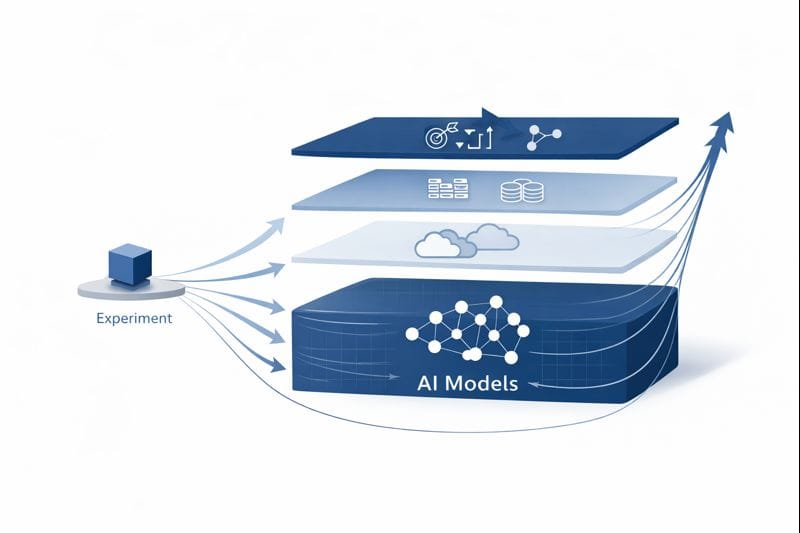
        </div><p>Waiting for environments. Waiting for data. Waiting for approvals. Waiting for someone to say yes, you can try this. That waiting has a name. Decision latency. And it silently drains money, momentum, and morale.</p><p>A few years ago, I worked with a product team that had solid engineers, smart leadership, and a clear roadmap. Still, every new idea took weeks to validate. Not because it was complex, but because spinning up the required infrastructure involved tickets, approvals, estimates, and coordination across teams.</p><p>By the time the environment was ready, the original question had often changed. Sometimes the opportunity was already gone. This is where cloud. And more specifically AWS. changes the game in a way most people underestimate.</p><div class="kg-card kg-header-card kg-v2 kg-width-regular " style="background-color: #000000;" data-background-color="#000000">
            
            <div class="kg-header-card-content">
                
                <div class="kg-header-card-text kg-align-center">
                    <h2 id="when-infrastructure-controls-your-thinking" class="kg-header-card-heading" style="color: #FFFFFF;" data-text-color="#FFFFFF"><b><strong style="white-space: pre-wrap;">When infrastructure controls your thinking</strong></b></h2>
                    
                    
                </div>
            </div>
        </div><p>Traditional infrastructure does something subtle to organizations. It shapes how people think. If setting up a new system is expensive and slow, teams stop asking bold questions. Experiments become risky. Decisions get escalated. <a href="https://www.prezelfy.com/cloud/" rel="noreferrer">Innovation</a> becomes theoretical instead of practical.</p><p>You can see it in phrases like:</p><ul><li>Let’s not try this yet</li><li>We need a business case first</li><li>We will plan it for next quarter</li></ul><p>These are not bad intentions. They are survival mechanisms in a world where every change has a heavy upfront cost. AWS removes that constraint. But only if it is used intentionally.</p><p>Most companies adopt AWS for technical reasons. Fewer manage to unlock its strategic value. The real power of AWS is optionality. The ability to test ideas cheaply, reverse decisions quickly, and move forward with evidence instead of assumptions. Infrastructure as code, ephemeral environments, managed services, and pay-as-you-go pricing all serve the same purpose. They shorten the distance between an idea and a result.</p><p>When a team can spin up an environment in minutes, try something, measure it, and tear it down the same day, something interesting happens. Decision making accelerates.</p><h3 id="faster-feedback-beats-perfect-planning"><strong>Faster feedback beats perfect planning</strong></h3><p>In one AWS setup we redesigned, a product team went from monthly infrastructure changes to daily experiments. Nothing dramatic changed in their architecture. What changed was access and autonomy. Engineers no longer waited for infrastructure. Product managers no longer waited for estimates. Leadership no longer waited for opinions. They waited for data.</p><p>Costs actually went down, not up. Because bad ideas died early. And good ones proved their value fast. This is the part many companies miss. Cloud maturity is not about how advanced your services are. It is about how quickly your organization can learn.</p><p>Decision latency is rarely tracked on a balance sheet. But it shows up everywhere.</p><p>Missed market timing. Overbuilt features. Long meetings with no outcome. Burned out teams. AWS, when designed well, turns infrastructure into a non-event. Something that adapts to the business instead of blocking it.</p><p>The companies that win are not the ones with the biggest cloud footprint. They are the ones where infrastructure stops being a reason to say no.</p><div class="kg-card kg-header-card kg-v2 kg-width-regular " style="background-color: #000000;" data-background-color="#000000">
            
            <div class="kg-header-card-content">
                
                <div class="kg-header-card-text kg-align-center">
                    <h2 id="here-is-the-realization-that-changes-how-you-look-at-cloud-investments" class="kg-header-card-heading" style="color: #FFFFFF;" data-text-color="#FFFFFF"><span style="white-space: pre-wrap;">Here is the realization that changes how you look at cloud investments.</span></h2>
                    
                    
                </div>
            </div>
        </div><p>You are not paying AWS to run workloads. You are paying to remove hesitation from your organization. When decisions become cheap, learning becomes fast. And when learning becomes fast, growth follows naturally.</p><p>That is the real cloud advantage. Quiet, structural, and incredibly hard to copy once it is embedded.</p><div class="kg-card kg-cta-card kg-cta-bg-grey kg-cta-minimal   " data-layout="minimal">
            
            <div class="kg-cta-content">
                
                
                    <div class="kg-cta-content-inner">
                    
                        <div class="kg-cta-text">
                            <p dir="ltr"><span style="white-space: pre-wrap;">If this sounds familiar, your cloud challenge is probably not technical. It is structural. We help companies design cloud environments that reduce friction, accelerate decisions, and turn experimentation into a habit. Not by adding complexity, but by removing it.</span></p><p dir="ltr"><span style="white-space: pre-wrap;">If you want your teams to move faster without burning money or people, let’s talk. A short conversation can reveal where your biggest hidden costs actually live.</span></p>
                        </div>
                    
                    
                        <a href="https://www.prezelfy.com/contact-us/" class="kg-cta-button " style="background-color: #000000; color: #ffffff;">
                            Book a consultation
                        </a>
                        
                    </div>
                
            </div>
        </div>
            ]]>
        </content>
    </entry>
    <entry>
        <title>How Enterprises Build Secure and Observable AI Agents on AWS</title>
        <author>
            <name>Prezelfy UG</name>
        </author>
        <link href="https://www.prezelfy.com/how-enterprises-build-secure-and-observable-ai-agents-on-aws/"/>
        <id>https://www.prezelfy.com/how-enterprises-build-secure-and-observable-ai-agents-on-aws/</id>
        <media:content url="https://www.prezelfy.com/media/posts/21/ChatGPT-Image-Jan-21-2026-08_46_56-PM.png" medium="image" />
            <category term="Resources"/>
            <category term="AI"/>

        <updated>2026-01-21T20:50:18+01:00</updated>
            <summary type="html">
                <![CDATA[
                        <img src="https://www.prezelfy.com/media/posts/21/ChatGPT-Image-Jan-21-2026-08_46_56-PM.png" alt="" />
                    Most companies do not fail at AI because models are weak. They fail because everything around the model is chaotic. A growing European SaaS company once told us they had five internal teams experimenting with AI. One team built a chatbot. Another built an automation&hellip;
                ]]>
            </summary>
        <content type="html">
            <![CDATA[
                    <p><img src="https://www.prezelfy.com/media/posts/21/ChatGPT-Image-Jan-21-2026-08_46_56-PM.png" class="type:primaryImage" alt="" /></p>
                <p>Most companies do not fail at AI because models are weak. They fail because everything around the model is chaotic.</p><p>A growing European SaaS company once told us they had five internal teams experimenting with AI. One team built a chatbot. Another built an automation agent. A third connected tools and APIs directly to a large language model. Nothing was shared. Nothing was observable. No one could answer a simple question. Who is calling which model, with what data, and at what cost.</p><div class="kg-card kg-header-card kg-v2 kg-width-regular " style="background-color: #000000;" data-background-color="#000000">
            
            <div class="kg-header-card-content">
                
                <div class="kg-header-card-text kg-align-center">
                    <h2 id="that-is-where-aws-agent-core-combined-with-strand-quietly-changes-the-game" class="kg-header-card-heading" style="color: #FFFFFF;" data-text-color="#FFFFFF"><span style="white-space: pre-wrap;">That is where Amazon Bedrock AgentCore combined with Strands Agents quietly changes the game.</span></h2>
                    
                    
                </div>
            </div>
        </div><p>At Prezelfy, we see the same pattern again and again. Companies want agents that actually do work, not demos. They want secure access, controlled tools, persistent memory, deep observability, and a way to scale beyond one clever engineer. Amazon Bedrock AgentCore gives the foundation. Strands gives the orchestration. Prezelfy turns both into something companies can safely operate.</p><p>The real problem companies face is not building an agent. It is operating agents in production.</p><p>Without a central gateway, agents sprawl. Credentials get hard coded. Tools are called without guardrails. Memory lives in random databases. Debugging turns into guesswork. Compliance teams panic because no one can trace decisions.</p><p>Amazon Bedrock AgentCore solves this by acting as the backbone for agent based systems. AgentCore Gateway becomes the single controlled entry point. Every agent request flows through it. Authentication, authorization, rate limits, and encryption are enforced consistently. Suddenly security teams can breathe again.</p><p>On top of that, tools are no longer an afterthought. With AgentCore Tools, each action an agent can take is explicitly defined. APIs, internal services, databases, and workflows are registered as tools with permissions. Agents can only do what they are allowed to do. This is the difference between an assistant and a liability.</p><p>Memory is where most agent projects quietly break. Stateless agents feel impressive in demos but useless in reality. AgentCore Memory allows structured, auditable, long lived context. Agents remember customers, past decisions, and operational state. More importantly, memory is governed. It can be encrypted, scoped, expired, and inspected.</p><div class="kg-card kg-header-card kg-v2 kg-width-regular " style="background-color: #000000;" data-background-color="#000000">
            
            <div class="kg-header-card-content">
                
                <div class="kg-header-card-text kg-align-center">
                    <h2 id="observability-is-where-strand-shines-when-combined-with-agent-core" class="kg-header-card-heading" style="color: #FFFFFF;" data-text-color="#FFFFFF"><span style="white-space: pre-wrap;">Observability is where Strands shines when combined with AgentCore.</span></h2>
                    
                    
                </div>
            </div>
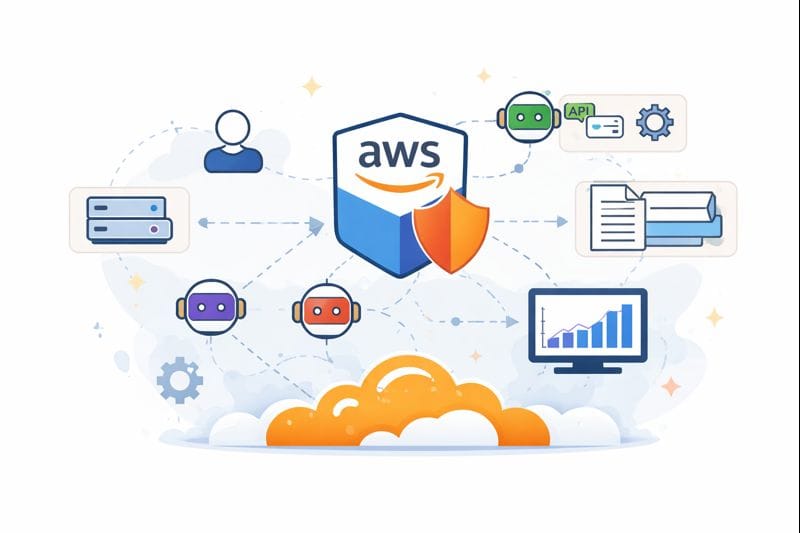
        </div><p> Instead of guessing why an agent behaved strangely, teams can trace every step. Inputs, tool calls, memory reads, outputs, latency, and cost all become visible. Metrics flow into dashboards. Logs tell a story. Incidents become debuggable instead of mysterious.</p><p>Custom Agents are where companies finally differentiate. With Strands orchestration, agents are not isolated bots. They collaborate. One agent analyzes. Another plans. A third executes through tools. A fourth validates results. AgentCore keeps them secure and observable. Strands keeps them coordinated.</p><p>This is the point where most companies ask a hard question. How do we adopt this without turning our cloud into an experiment?</p><p>This is where <a href="https://www.prezelfy.com/ai/" rel="noreferrer">Prezelfy</a> becomes the main character.</p><p>We do not sell theory. We build production ready agent platforms on AWS. For most clients, adoption follows a clear path. We start with an AgentCore Gateway deployed inside your AWS VPC. No external data leakage. Full audit logging. Then we model your real business workflows as tools, not generic prompts. After that, we design memory schemas that match your domain. Finally, we wire everything into observability so leadership can see value, cost, and risk in one place.</p><p>Instead of one big bet, companies get incremental wins. An internal Cloud Advisor agent. A support triage agent. An operations automation agent. Each one built on the same secure backbone.</p><p>The result is not more AI hype. The result is controlled leverage.</p><figure class="post__image"><img src="https://www.prezelfy.com/media/posts/21/ChatGPT-Image-Jan-21-2026-08_49_43-PM.png" alt="" loading="lazy" width="800" height="533" sizes="(max-width: 1920px) 100vw, 1920px" srcset="https://www.prezelfy.com/media/posts/21/responsive/ChatGPT-Image-Jan-21-2026-08_49_43-PM-xs.png 640w ,https://www.prezelfy.com/media/posts/21/responsive/ChatGPT-Image-Jan-21-2026-08_49_43-PM-sm.png 768w ,https://www.prezelfy.com/media/posts/21/responsive/ChatGPT-Image-Jan-21-2026-08_49_43-PM-md.png 1024w ,https://www.prezelfy.com/media/posts/21/responsive/ChatGPT-Image-Jan-21-2026-08_49_43-PM-lg.png 1366w ,https://www.prezelfy.com/media/posts/21/responsive/ChatGPT-Image-Jan-21-2026-08_49_43-PM-xl.png 1600w ,https://www.prezelfy.com/media/posts/21/responsive/ChatGPT-Image-Jan-21-2026-08_49_43-PM-2xl.png 1920w"></figure><p>In its simplest form, the architecture looks like this. Users and systems interact through the AgentCore Gateway. Requests are authenticated and routed to custom agents orchestrated by Strands. Agents invoke approved tools, read and write governed memory, and emit logs and metrics into observability dashboards. Everything runs inside AWS with clear ownership and controls.</p><p>If you are experimenting with agents today, you are already paying the cost of not having this structure. If you are not experimenting yet, your competitors are.</p><p>Prezelfy exists to make this transition boring in the best possible way. Secure by default. Observable by design. Built for real companies, not demos.</p><div class="kg-card kg-cta-card kg-cta-bg-grey kg-cta-minimal   " data-layout="minimal">
            
            <div class="kg-cta-content">
                
                
                    <div class="kg-cta-content-inner">
                    
                        <div class="kg-cta-text">
                            <p dir="ltr"><span style="white-space: pre-wrap;">If you want to move from AI experiments to production ready agents, talk to Prezelfy. We help you design, build, and operate AI agents on AWS using AgentCore and Strands, without compromising security, compliance, or sanity.</span></p>
                        </div>
                    
                    
                        <a href="https://www.prezelfy.com/contact-us/" class="kg-cta-button " style="background-color: #000000; color: #ffffff;">
                            Book a consultation
                        </a>
                        
                    </div>
                
            </div>
        </div>
            ]]>
        </content>
    </entry>
    <entry>
        <title>AI Trends in 2026: What Enterprises Need to Know</title>
        <author>
            <name>Prezelfy UG</name>
        </author>
        <link href="https://www.prezelfy.com/ai-trends-in-2026/"/>
        <id>https://www.prezelfy.com/ai-trends-in-2026/</id>
        <media:content url="https://www.prezelfy.com/media/posts/19/ChatGPT-Image-Jan-11-2026-12_15_44-PM.png" medium="image" />
            <category term="Resources"/>
            <category term="AI"/>

        <updated>2026-01-11T12:16:32+01:00</updated>
            <summary type="html">
                <![CDATA[
                        <img src="https://www.prezelfy.com/media/posts/19/ChatGPT-Image-Jan-11-2026-12_15_44-PM.png" alt="" />
                    AI in 2026 is no longer about experimenting with tools or chasing hype. It has entered a phase where organizations expect measurable outcomes, clear governance, and direct impact on operations. What feels trendy now is not flashy demos but disciplined adoption that fits real business&hellip;
                ]]>
            </summary>
        <content type="html">
            <![CDATA[
                    <p><img src="https://www.prezelfy.com/media/posts/19/ChatGPT-Image-Jan-11-2026-12_15_44-PM.png" class="type:primaryImage" alt="" /></p>
                <p>AI in 2026 is no longer about experimenting with tools or chasing hype. It has entered a phase where organizations expect measurable outcomes, clear governance, and direct impact on operations. What feels trendy now is not flashy demos but disciplined adoption that fits real business constraints. Below are the most important <a href="https://www.prezelfy.com/ai/" rel="noreferrer">AI trends</a> shaping 2026 and why they matter for decision makers.</p><div class="kg-card kg-header-card kg-v2 kg-width-regular " style="background-color: #000000;" data-background-color="#000000">
            
            <div class="kg-header-card-content">
                
                <div class="kg-header-card-text kg-align-center">
                    <h2 id="the-rise-of-private-and-sovereign-ai" class="kg-header-card-heading" style="color: #FFFFFF;" data-text-color="#FFFFFF"><span style="white-space: pre-wrap;">The rise of private and sovereign AI</span></h2>
                    
                    
                </div>
            </div>
        </div><p><br>One of the strongest trends in 2026 is the move away from fully public AI endpoints toward private and sovereign deployments. Enterprises increasingly deploy models inside their own cloud environments to maintain data control, meet regulatory requirements, and reduce risk. This is especially visible in regulated industries like finance, healthcare, and energy. AI is now treated as core infrastructure, not an external SaaS experiment. Providers such as OpenAI and major cloud platforms support private setups, but companies still struggle with architecture, security, and cost control. This gap is where consulting and implementation expertise becomes critical.</p><h2 id="ai-agents-become-operational-not-experimental">AI agents become operational, not experimental</h2><p><br>In previous years, AI assistants mostly helped individuals write text or analyze data. In 2026, <a href="https://www.prezelfy.com/ai/" rel="noreferrer">AI agents</a> operate at the system level. These agents trigger workflows, analyze signals, and interact with multiple tools autonomously within defined boundaries. Examples include <a href="https://www.prezelfy.com/cloud/" rel="noreferrer">cloud cost</a> optimization agents, security posture advisors, and internal knowledge agents for support teams. The key shift is responsibility. Agents are designed to augment teams, not replace them, and they operate under strict rules, logging, and approval flows.</p><h2 id="multimodal-ai-enters-everyday-business-workflows">Multimodal AI enters everyday business workflows</h2><p><br>Text only models are no longer enough. In 2026, multimodal AI that understands text, images, audio, and structured data is becoming standard. Enterprises use this to analyze documents, screenshots, diagrams, recordings, and dashboards together. This is particularly valuable in operations, customer support, and compliance reviews. The trend is not about novelty but efficiency. Fewer handoffs, faster understanding, and better decisions across teams.</p><h2 id="ai-governance-becomes-a-board-level-topic">AI governance becomes a board level topic</h2><p><br>Another defining trend is governance by design. Companies no longer ask whether to <a href="https://www.prezelfy.com/ai/" rel="noreferrer">govern AI</a> but how early it should be embedded. In 2026, governance frameworks cover data access, prompt logging, model selection, bias controls, and human oversight. This is no longer owned only by legal teams. Engineering, security, and leadership collaborate to define how AI is used responsibly. Organizations that skip this step often slow down later when audits or incidents appear.</p><h2 id="cost-awareness-and-efficiency-over-raw-capability">Cost awareness and efficiency over raw capability</h2><p><br>The mindset around AI spending has matured. Instead of asking for the most powerful model, teams ask which model is good enough for the job. Model routing, caching, and usage monitoring are now standard patterns. Companies actively track token usage and business value per use case. AI success in 2026 is measured by efficiency, not by how advanced the model sounds in presentations.</p><div class="kg-card kg-header-card kg-v2 kg-width-regular " style="background-color: #000000;" data-background-color="#000000">
            
            <div class="kg-header-card-content">
                
                <div class="kg-header-card-text kg-align-center">
                    <h2 id="from-pilots-to-platforms" class="kg-header-card-heading" style="color: #FFFFFF;" data-text-color="#FFFFFF"><span style="white-space: pre-wrap;">From pilots to platforms</span></h2>
                    
                    
                </div>
            </div>
        </div><p><br>Many organizations ran pilots between 2023 and 2025. In 2026, the winners consolidate those learnings into internal AI platforms. These platforms provide shared access to models, common security controls, monitoring, and reusable components. This avoids fragmentation and shadow AI usage across departments. AI becomes a platform capability similar to cloud or data, not a collection of disconnected tools.</p><p>What this means for organizations?<br>AI in 2026 rewards clarity and discipline. The most successful companies focus on fewer, high impact use cases, deploy them securely, and scale them through shared platforms. They treat AI as a long term capability, not a short term trend. The question is no longer whether <a href="https://www.prezelfy.com/ai/" rel="noreferrer">AI is useful</a>, but whether it is integrated in a way that fits the organization’s reality.</p><div class="kg-card kg-cta-card kg-cta-bg-grey kg-cta-minimal   " data-layout="minimal">
            
            <div class="kg-cta-content">
                
                
                    <div class="kg-cta-content-inner">
                    
                        <div class="kg-cta-text">
                            <p><span style="white-space: pre-wrap;">If your organization is moving from experimentation to real adoption, now is the right time to rethink architecture, governance, and operating models. At Prezelfy, we help teams design and deploy AI capabilities that are secure, practical, and aligned with real business needs. If you want to turn AI from hype into an operational advantage, let’s talk.</span></p>
                        </div>
                    
                    
                        <a href="https://www.prezelfy.com/contact-us/" class="kg-cta-button " style="background-color: #000000; color: #ffffff;">
                            Book a consultation
                        </a>
                        
                    </div>
                
            </div>
        </div>
            ]]>
        </content>
    </entry>
    <entry>
        <title>AI Services in 2026: From Experimentation to Business Capability</title>
        <author>
            <name>Prezelfy UG</name>
        </author>
        <link href="https://www.prezelfy.com/ai-services-2026-business-capability/"/>
        <id>https://www.prezelfy.com/ai-services-2026-business-capability/</id>
        <media:content url="https://www.prezelfy.com/media/posts/15/ChatGPT-Image-Jan-2-2026-05_12_14-PM.png" medium="image" />
            <category term="Resources"/>
            <category term="AI"/>

        <updated>2026-01-02T17:14:24+01:00</updated>
            <summary type="html">
                <![CDATA[
                        <img src="https://www.prezelfy.com/media/posts/15/ChatGPT-Image-Jan-2-2026-05_12_14-PM.png" alt="" />
                    As Cloud services mature into a core business capability, artificial intelligence is following a similar path. In 2026 AI services are no longer defined by isolated pilots or impressive demos. They are becoming embedded capabilities that influence how organizations make decisions, design products, and operate&hellip;
                ]]>
            </summary>
        <content type="html">
            <![CDATA[
                    <p><img src="https://www.prezelfy.com/media/posts/15/ChatGPT-Image-Jan-2-2026-05_12_14-PM.png" class="type:primaryImage" alt="" /></p>
                <p>As <a href="https://www.prezelfy.com/cloud/" rel="noreferrer">Cloud services</a> mature into a core business capability, artificial intelligence is following a similar path. In 2026 <a href="https://www.prezelfy.com/ai/" rel="noreferrer">AI services</a> are no longer defined by isolated pilots or impressive demos. They are becoming embedded capabilities that influence how organizations make decisions, design products, and operate at scale. Companies that still treat AI as an experiment risk falling behind those that treat it as part of their operating model.</p><p>For many organizations the first wave of AI adoption was driven by curiosity. Teams tested tools, generated content, built small automations, and explored what was possible. These experiments were valuable, but they rarely translated into sustained business impact. The missing link was not technology. It was structure.</p><div class="kg-card kg-header-card kg-v2 kg-width-regular " style="background-color: #000000;" data-background-color="#000000">
            
            <div class="kg-header-card-content">
                
                <div class="kg-header-card-text kg-align-center">
                    <h2 id="why-ai-services-must-evolve-beyond-pilots-in-2026" class="kg-header-card-heading" style="color: #FFFFFF;" data-text-color="#FFFFFF"><span style="white-space: pre-wrap;">Why AI Services Must Evolve Beyond Pilots in 2026</span></h2>
                    
                    
                </div>
            </div>
        </div><p>In 2026 successful AI adoption is less about choosing the right model and more about designing the right environment around it. <a href="https://www.prezelfy.com/ai/" rel="noreferrer">AI services</a> only create value when they are aligned with business goals, supported by reliable data, governed responsibly, and integrated into everyday workflows. Without these foundations AI remains a side project.</p><p>One of the biggest changes is how leadership views <a href="https://www.prezelfy.com/ai/" rel="noreferrer">AI services</a>. Early on AI was often delegated to innovation teams or individual departments. Today AI decisions increasingly sit alongside cloud, data, and security decisions. This reflects a growing understanding that AI shapes risk, compliance, cost structures, and customer experience. It is not a standalone capability.</p><p><a href="https://www.prezelfy.com/ai/" rel="noreferrer">AI services</a> in 2026 are deeply dependent on strong cloud foundations. Scalable infrastructure, secure data access, observability, and cost transparency all determine whether AI can move from prototype to production. Organizations that invested early in cloud maturity are able to industrialize AI faster. Those that did not often struggle with fragmented data, unclear ownership, and hidden risks.</p><div class="kg-card kg-header-card kg-v2 kg-width-regular " style="background-color: #000000;" data-background-color="#000000">
            
            <div class="kg-header-card-content">
                
                <div class="kg-header-card-text kg-align-center">
                    <h2 id="from-ai-tools-to-ai-operating-models" class="kg-header-card-heading" style="color: #FFFFFF;" data-text-color="#FFFFFF"><span style="white-space: pre-wrap;">From AI Tools to AI Operating Models</span></h2>
                    
                    
                </div>
            </div>
        </div><p>Another critical shift is the move from tool driven adoption to use case driven adoption. Instead of asking which AI platform to buy, mature organizations start by identifying where AI can meaningfully enhance work. This includes decision support, process acceleration, customer interaction, and knowledge access. The focus is on augmentation rather than replacement.</p><p>This approach changes how success is measured. AI value is no longer defined by model accuracy alone. It is defined by adoption, trust, and measurable outcomes. Can teams use AI confidently. Does it reduce friction. Does it improve quality or speed. These questions matter more than technical benchmarks.</p><p>Governance plays a central role in this transition. In 2026 responsible AI is not a legal checkbox. It is a design principle. Clear rules around data usage, model access, auditability, and human oversight enable faster adoption rather than slowing it down. When teams know what is allowed and why, they can innovate safely.</p><p>Organizations that lack governance often experience the opposite. AI usage becomes fragmented, shadow tools appear, and leadership loses visibility. This increases risk and reduces trust. Mature AI services create clarity and consistency without removing flexibility.</p><div class="kg-card kg-header-card kg-v2 kg-width-regular " style="background-color: #000000;" data-background-color="#000000">
            
            <div class="kg-header-card-content">
                
                <div class="kg-header-card-text kg-align-center">
                    <h2 id="how-ai-becomes-a-scalable-business-capability" class="kg-header-card-heading" style="color: #FFFFFF;" data-text-color="#FFFFFF"><span style="white-space: pre-wrap;">How AI Becomes a Scalable Business Capability</span></h2>
                    
                    
                </div>
            </div>
        </div><p>Another defining factor is capability building. <a href="https://www.prezelfy.com/ai/" rel="noreferrer">AI services</a> are not just delivered through platforms. They require new skills and ways of working. Employees need guidance on how to collaborate with AI effectively. Leaders need frameworks to decide where AI fits and where it does not. Without enablement AI initiatives remain fragile and dependent on a few individuals.</p><p>In 2026 the most effective AI programs treat learning as part of the rollout. Training, internal communities, and shared use cases help normalize AI usage across the organization. This creates momentum and reduces resistance.</p><p>Importantly <a href="https://www.prezelfy.com/ai/" rel="noreferrer">AI services</a> should not be seen as an end state. Models evolve quickly, regulations change, and business needs shift. AI capability must be adaptable. This is why organizations that design AI as a service, with clear interfaces and ownership, are better positioned to evolve without constant reinvention.</p><p>AI services in 2026 are not about chasing the latest model. They are about building a repeatable way to turn intelligence into impact. When combined with mature cloud capabilities, AI becomes a powerful extension of how the business operates rather than a disconnected experiment.</p><div class="kg-card kg-cta-card kg-cta-bg-grey kg-cta-minimal   " data-layout="minimal">
            
            <div class="kg-cta-content">
                
                
                    <div class="kg-cta-content-inner">
                    
                        <div class="kg-cta-text">
                            <p><span style="white-space: pre-wrap;">Building AI capability requires more than selecting tools. It requires clear strategy, strong foundations, and responsible operating models.</span></p><p><span style="white-space: pre-wrap;">At Prezelfy we help organizations move from scattered AI experiments to structured AI services that align with cloud strategy, governance, and real business outcomes. We work at the advisory and architecture level to ensure AI adoption is scalable, secure, and sustainable.</span></p><p><span style="white-space: pre-wrap;">If your teams are using AI but you are unsure whether it is creating lasting value, a focused advisory session can help clarify next steps.</span></p>
                        </div>
                    
                    
                        <a href="https://www.prezelfy.com/contact-us/" class="kg-cta-button " style="background-color: #000000; color: #ffffff;">
                            Book a consultation
                        </a>
                        
                    </div>
                
            </div>
        </div>
            ]]>
        </content>
    </entry>
    <entry>
        <title>Cloud in 2026: From Cost Optimization Tool to Core Business Capability</title>
        <author>
            <name>Prezelfy UG</name>
        </author>
        <link href="https://www.prezelfy.com/cloud-2026-core-business-capability/"/>
        <id>https://www.prezelfy.com/cloud-2026-core-business-capability/</id>
        <media:content url="https://www.prezelfy.com/media/posts/14/ChatGPT-Image-Jan-2-2026-04_35_41-PM.png" medium="image" />
            <category term="Resources"/>
            <category term="Cloud"/>

        <updated>2026-01-02T17:14:17+01:00</updated>
            <summary type="html">
                <![CDATA[
                        <img src="https://www.prezelfy.com/media/posts/14/ChatGPT-Image-Jan-2-2026-04_35_41-PM.png" alt="" />
                    For many years cloud services were framed as a financial decision. Move to the cloud, reduce capital expenditure, pay only for what you use, and scale when needed. This narrative helped cloud adoption gain momentum, but it is no longer accurate enough for 2026. Cloud&hellip;
                ]]>
            </summary>
        <content type="html">
            <![CDATA[
                    <p><img src="https://www.prezelfy.com/media/posts/14/ChatGPT-Image-Jan-2-2026-04_35_41-PM.png" class="type:primaryImage" alt="" /></p>
                <p>For many years cloud services were framed as a financial decision. Move to the cloud, reduce capital expenditure, pay only for what you use, and scale when needed. This narrative helped cloud adoption gain momentum, but it is no longer accurate enough for 2026. Cloud is no longer just an optimization lever. It has become a core business capability that shapes how companies operate, innovate, and compete.</p><div class="kg-card kg-header-card kg-v2 kg-width-regular " style="background-color: #000000;" data-background-color="#000000">
            
            <div class="kg-header-card-content">
                
                <div class="kg-header-card-text ">
                    <h2 id="why-cloud-services-matter-more-than-ever-in-2026" class="kg-header-card-heading" style="color: #FFFFFF;" data-text-color="#FFFFFF"><span style="white-space: pre-wrap;">Why Cloud Services Matter More Than Ever in 2026</span></h2>
                    
                    
                </div>
            </div>
        </div><p>In 2026 the most successful organizations do not ask whether they should use cloud services. They ask how mature their cloud capabilities are and how well those capabilities support business strategy. The conversation has shifted from infrastructure efficiency to organizational effectiveness.</p><p>The early cloud mindset was about replacement. Physical servers were replaced with virtual machines. Data centers were replaced with managed infrastructure. Procurement cycles were shortened and finance teams gained flexibility. This was valuable, but it was only the first step. Many companies stopped there and assumed they were done with cloud transformation.</p><p>That assumption is now a liability.</p><p>Modern cloud platforms are no longer just places to run workloads. They are environments where entire operating models are built. Product development, data usage, security practices, and even organizational structures are increasingly shaped by cloud capabilities. Companies that treat cloud as a background utility struggle to keep pace with those that treat it as a strategic foundation.</p><p>One of the biggest shifts in 2026 is how cloud enables speed as a business outcome. Speed is no longer limited to faster deployments or shorter release cycles. It includes how quickly a company can test ideas, launch new digital products, respond to regulatory changes, or integrate acquisitions. Cloud native capabilities such as managed data platforms, event driven architectures, and automated compliance controls directly influence how fast the business can move without increasing risk.</p><div class="kg-card kg-header-card kg-v2 kg-width-regular " style="background-color: #000000;" data-background-color="#000000">
            
            <div class="kg-header-card-content">
                
                <div class="kg-header-card-text kg-align-center">
                    <h2 id="what-cloud-maturity-really-means-for-leaders" class="kg-header-card-heading" style="color: #FFFFFF;" data-text-color="#FFFFFF"><span style="white-space: pre-wrap;">What Cloud Maturity Really Means for Leaders</span></h2>
                    
                    
                </div>
            </div>
        </div><p>This is why cloud decisions are increasingly made at leadership level, not just within engineering teams. The cloud shapes what is possible. It determines whether a company can experiment safely, scale globally, and adapt continuously. In this sense cloud becomes similar to finance or legal functions. It is part of the core machinery of the organization.</p><p>Security and governance are another area where the cloud narrative has evolved. In the past cloud security discussions were defensive. Is the cloud safe. Who is responsible. How do we avoid misconfigurations. In 2026 leading organizations approach cloud security as an enabler. Strong cloud governance allows teams to move faster with confidence. Clear policies, automated controls, and well designed architectures reduce friction rather than increase it.</p><p>This is where many companies struggle. They either over centralize control and slow everything down, or they decentralize completely and accumulate risk. Cloud maturity means finding the balance where guardrails are strong but flexible. This requires architectural thinking, not just tools.</p><p>Cloud also plays a central role in how companies adopt artificial intelligence. AI in production is not just about models. It depends on data pipelines, scalable compute, observability, and cost transparency. All of these are cloud capabilities. Organizations that already have strong cloud foundations can move from AI experiments to real business use cases much faster than those that do not.</p><div class="kg-card kg-header-card kg-v2 kg-width-regular " style="background-color: #000000;" data-background-color="#000000">
            
            <div class="kg-header-card-content">
                
                <div class="kg-header-card-text kg-align-center">
                    <h2 id="cloud-as-the-foundation-for-ai-adoption" class="kg-header-card-heading" style="color: #FFFFFF;" data-text-color="#FFFFFF"><span style="white-space: pre-wrap;">Cloud as the Foundation for AI Adoption</span><br></h2>
                    
                    
                </div>
            </div>
        </div><p>In 2026 cloud platforms are increasingly the place where AI workloads live, where data is governed, and where compliance is enforced. This makes <a href="https://www.prezelfy.com/cloud/" rel="noreferrer">Cloud strategy</a> inseparable from <a href="https://www.prezelfy.com/ai/" rel="noreferrer">AI strategy</a>. Treating cloud as a cost center while expecting AI to deliver competitive advantage is a contradiction that many companies are now confronting.</p><p>Another important change is how cloud maturity affects talent and culture. Engineers, data professionals, and product teams expect modern cloud environments. They expect automation, self service, and clear patterns. Companies that lack these capabilities struggle to attract and retain talent. Cloud is no longer invisible to employees. It directly shapes their daily experience of work.</p><p>A common mistake is to equate cloud maturity with multi cloud or complex architectures. In reality maturity is about clarity. Clear ownership, clear decision making, and clear alignment between business goals and technical choices. Some mature organizations use multiple cloud providers. Others deliberately standardize on one. The difference is that the decision is intentional and well understood.</p><p>By 2026 the question is no longer how much money the cloud saves. The question is how effectively it enables growth, resilience, and innovation. Cloud platforms have become the operating layer for digital business. Ignoring this reality creates strategic blind spots.</p><p>For leaders, this means cloud discussions must move beyond cost reports and technical roadmaps. They must connect cloud capabilities to business outcomes. For technology teams, it means stepping into a more advisory role and helping the organization understand what the cloud makes possible.</p><p>Cloud in 2026 is not about infrastructure. It is about capability. Companies that recognize this shift and act on it will be better positioned to adapt to whatever comes next. Those that do not will find that their cloud environments may be running, but their business is falling behind.</p><div class="kg-card kg-cta-card kg-cta-bg-grey kg-cta-minimal   " data-layout="minimal">
            
            <div class="kg-cta-content">
                
                
                    <div class="kg-cta-content-inner">
                    
                        <div class="kg-cta-text">
                            <p><span style="white-space: pre-wrap;">Cloud platforms evolve fast, but many organizations are stuck with yesterday’s cloud decisions. We help companies assess cloud maturity, identify structural gaps, and define a pragmatic roadmap that supports growth, security, and AI readiness.</span></p>
                        </div>
                    
                    
                        <a href="https://www.prezelfy.com/contact-us/" class="kg-cta-button " style="background-color: #000000; color: #ffffff;">
                            Book a consultation
                        </a>
                        
                    </div>
                
            </div>
        </div>
            ]]>
        </content>
    </entry>
</feed>